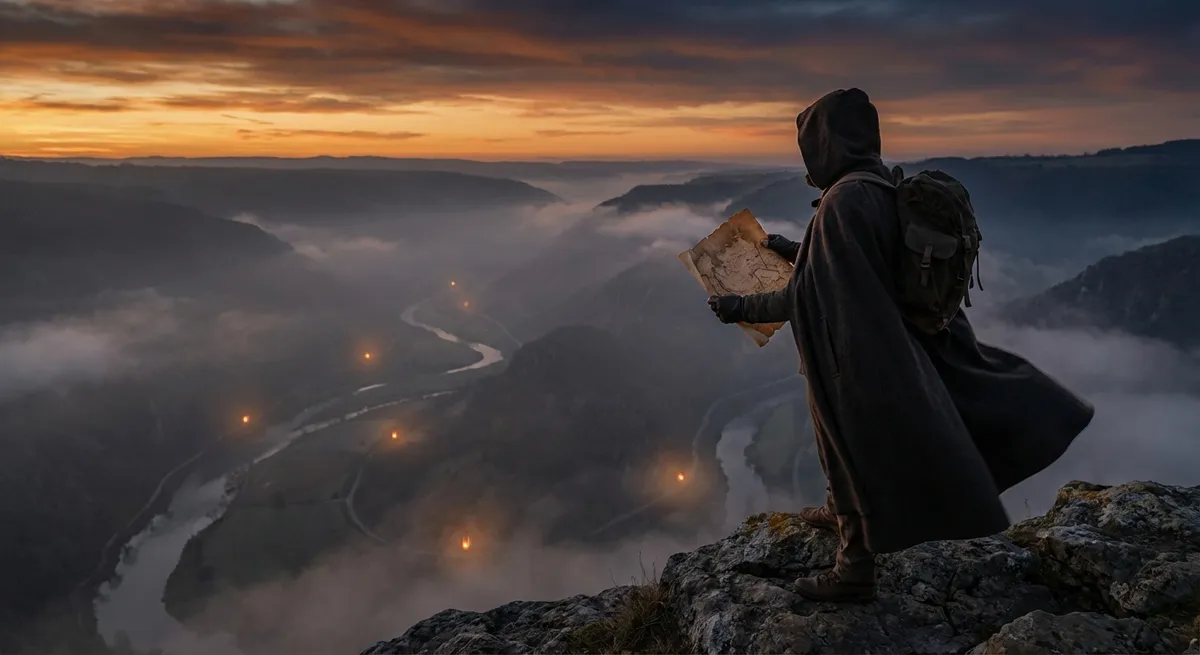
This is your invitation to design adventures that feel cinematic and deeply personal—experiences that don’t just fill a passport, but rewrite your story from the inside out.
Chase the Golden Hour, Not the Checklist
There’s a special kind of magic in the hours when the world softens—sunrise and sunset, when light catches on rooftops, mountains, and waves, and everything looks just a little more alive. Travelers often rush through these moments, racing to “see it all,” but golden hour is where places reveal their soul.
Instead of packing your day with nonstop stops, plan around light and feeling. Wake before dawn in a city you don’t know and walk as the streets yawn awake: shopkeepers dragging up shutters, the smell of bread in the air, a stray cat weaving between motorbikes. In the mountains or on a coast, stake out a viewpoint well before sunset, bring a simple picnic, and let the colors shift slowly while you actually stay still.
Practical move: use sunrise and sunset times (plus local weather) to design your day. Let one or two special moments anchor your schedule, then allow the rest to be flexible. You’ll trade a stuffed itinerary for richer, slower, more cinematic memories—less “I saw everything,” more “I felt something.”
Turn Ordinary Roads into Micro-Expeditions
You don’t need a jungle or a glacier to feel like an explorer. Any road can be an expedition if you treat it like unknown territory. That coastal bus ride, that train through farmland, that rental car journey between cities—these are moving front-row seats to a living world, not just dead space between attractions.
Turn transit into an adventure: sit by the window, keep your phone in your pocket more than your hand, and pay obsessive attention. Count how many different landscapes you pass in two hours. Notice roadside shrines, workers in the fields, children walking to school. Hop off one stop earlier than planned and walk the last stretch, letting curiosity choose your side streets.
To take it up a level, pick a theme for your route: “follow the river,” “chase the old railway line,” or “coffee stops only in family-run places.” The road becomes a story you’re co-writing with the map—one decision, one detour at a time.
Say Yes to the “Small Wild”: Skills That Stretch You
Big adventures are unforgettable, but the “small wild” is what quietly shifts who you are. Learning something new in an unfamiliar place stretches your comfort zone in a way that lasts long after you’ve unpacked.
Take a basic climbing class on natural rock in a new country, guided by a certified local instructor. Join a beginner surf session where wiping out is half the fun. Sign up for a navigation workshop, learning to read real maps instead of just apps. Even a simple night hike with a guide—where you learn to move by headlamp and starlight—can flip a switch inside you.
The key is choosing skills that slightly scare you but are still safe and structured. Look for reputable operators, read reviews, and check certifications. You’re not trying to prove anything; you’re learning to trust your body, your instincts, and your ability to adapt. Each new skill becomes a portable souvenir you can use for the rest of your life.
Build a Personal Ritual in Every Place You Visit
Adventures become legendary when they feel personal, not generic. One of the most powerful ways to anchor memories is through simple rituals you repeat in different places—your signature way of calling a destination “yours.”
Maybe your ritual is finding the highest publicly accessible point in every city—hill, tower, rooftop bar—and watching the world from above. Maybe it’s a sunrise walk by water wherever possible, or tasting the local bakery’s best pastry with a notebook open to jot down thoughts. You might sketch one scene per trip, collect a leaf or bus ticket, or record a one-minute voice note each night describing the most surprising moment of the day.
These rituals turn random trips into a connected life story. Years from now, you’ll remember not just where you went, but how you showed up in each place. The continuity becomes its own adventure, threading together continents and seasons into one ongoing epic.
Make Space for Serendipity: Plan Less, Notice More
The rarest travel currency isn’t time or money—it’s unscheduled attention. When every second is booked, you leave no room for coincidence, chance encounters, or the kind of wrong turns that become your favorite stories.
Try designing at least one “open chapter” in every journey: a half-day or full day with no fixed plans. Start with one anchor (a neighborhood you’re curious about, a market, a park), then wander with intention. Follow music down an alley. Sit on a bench and people-watch for longer than feels productive. Say yes when a local recommends a side street café or a viewpoint you won’t find in a guidebook.
Stay smart—trust your instincts, keep an eye on your surroundings, and protect your safety—but give curiosity the steering wheel. Often, the most vivid memories come from moments you could never have scheduled: the impromptu street game you get dragged into, the stranger who shares a story that changes how you see the world, the hidden courtyard café where time slows down.
Conclusion
Your life doesn’t need more screensaver moments; it needs more felt moments—those electric flashes of aliveness that tell you, unmistakably, “I am here. I am awake. This is my story.”
Adventure isn’t a distant prize waiting at the edge of the world. It’s a way of traveling—and living—that you can practice anywhere: chasing golden light instead of checklists, turning roads into expeditions, learning skills that stretch you, building personal rituals, and leaving space for surprise.
You don’t have to wait until you’re braver, richer, or more “ready.” The only thing adventure really demands is that you show up differently.
The next chapter of your story is unplanned, unwritten, and closer than you think.
Sources
- U.S. National Park Service – Safety & Trip Planning - Guidance on planning safe adventures in natural environments, useful when adding outdoor elements to your travels
- Adventure Travel Trade Association – Adventure Travel Trends - Research on how travelers are seeking immersive, skill-building, and experiential journeys
- National Geographic – The Science of Awe - Explores how awe-filled experiences, like sunsets and wild landscapes, impact our brains and well-being
- Harvard Medical School – Learning New Skills and Brain Health - Explains why learning new activities (like climbing or surfing) can build resilience and cognitive strength
- BBC Travel – The Joy of Getting Lost - Discusses how embracing unplanned wandering can lead to more meaningful travel experiences