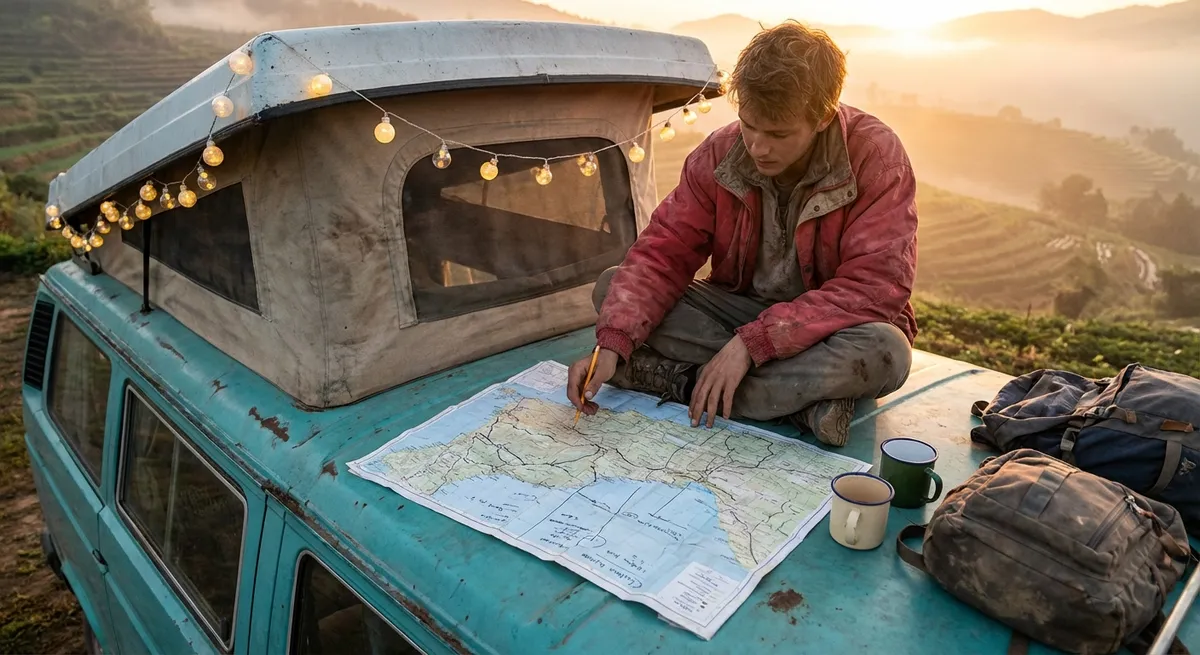
This is your permission slip to travel sooner, stay longer, and feel more. Here are five powerful shifts that turn tight budgets into big adventures.
1. Chase Experiences, Not Itineraries
The most unforgettable trips rarely follow a perfect plan. When your budget forces you to slow down and improvise, you stop racing from attraction to attraction and start living inside the place.
Say yes to:
- Wandering local markets instead of just ticking off “top sights”
- Sitting on a park bench to people-watch instead of paying for a city view bar
- Joining pickup games, free walking tours, or community events
- Getting lost on purpose in neighborhoods outside the tourist center
Budget travel pushes you toward what’s cheap or free—and those are often the most human, unfiltered moments: a café where the menu is handwritten, a busker who turns a quiet square into a concert, a grandma who insists you try her homemade pastry.
When you judge a trip by the stories you collect instead of the receipts you keep, even a single cheap night in a new place can feel gigantic.
2. Sleep Where the Stories Are
Your bed for the night doesn’t have to be pristine to be unforgettable. The more creative you are with where you stay, the richer your trip becomes.
Think beyond the standard hotel:
- Hostels & guesthouses: Common rooms become instant social networks—perfect for finding day-trip buddies and local tips.
- Homestays and small inns: Shared kitchens, courtyard chats, and late-night tea with hosts who know every backstreet.
- Overnight buses & trains: A ticket that doubles as both transport and accommodation, plus a moving window into countryside you’d never otherwise see.
- Work exchanges & volunteering: A few hours of help per day in exchange for a bed, meals, and a built-in community.
Yes, you trade turn-down service for squeaky bunks or mismatched sheets. In return you get something big money can’t buy: conversation, connection, and a sense that you’re not just passing through—you’re part of the scene, however briefly.
3. Turn Transit into the Main Event
On a shoestring, you can’t teleport everywhere—but that’s the point. When you embrace slow, cheap transportation, the getting there becomes part of the story, not wasted time between “real” experiences.
Make the journey the highlight:
- Choose regional buses that zigzag through small towns you’ve never heard of
- Ride local trains and metro lines instead of tours—not just to save, but to feel the daily rhythm of the city
- Take ferries and shared taxis that locals actually use instead of tourist-only shuttles
- Walk or rent a bike whenever possible; the world changes at street level
That 6-hour bus ride? It’s where you see how people dress, what snacks they buy, what music plays on the radio. It’s watching the landscape morph from city to fields to mountains while you share cookies with the stranger in the next seat.
Budget transit forces you to see the spaces between famous places—and those in-betweens are where real life hums.
4. Eat Like You Live There, Not Like You’re Visiting
One of the biggest budget drains is food in tourist corridors. Step a few blocks away, and suddenly your money stretches—and your meals become far more interesting.
Let your taste buds lead you off the main drag:
- Follow the lunchtime rush: where local workers eat is usually cheap, hearty, and authentic
- Hunt for markets and street food—fresh fruit, local snacks, and full plates for a fraction of restaurant prices
- Learn a few phrases (“What do you recommend?” / “What’s local?”) and let vendors choose for you
- Make picnics using grocery stores and bakeries, then eat with a view (by a river, on steps, at a lookout point)
- Try cooking one dish with ingredients you’ve never seen before
Without fancy menus or Instagram-ready plating, you start to notice other details: the noise of cutlery, the smell of spices, the way families order together, kids chasing each other between plastic chairs.
Budget-friendly food isn’t just cheaper—it’s often where a place tastes most like itself.
5. Design Days Around Free Richness, Not Paid Entertainment
When money is tight, you notice how much of the world is actually free, or nearly free, if you know where to look.
Instead of stacking your days with pricey attractions, build them around:
- Public parks and waterfronts where cities exhale: run, read, journal, or people-watch
- Free museum days or hours—many major cities offer them if you time it right
- Temples, churches, mosques, and cultural centers that welcome visitors respectfully
- Community events like open-air concerts, festivals, or seasonal celebrations
- Sunrises and sunsets from viewpoints that don’t charge admission
Plan one “pay” activity if you want—but wrap it with free experiences. Budget travel teaches you that awe doesn’t need a ticket. It lives in light on old bricks, in music from an unseen window, in the moment a local stops to help you when you’re clearly, hilariously lost.
When you stop chasing value in “things you bought” and start seeking it in “moments you felt,” every budget day can feel wildly full.
Conclusion
There will always be reasons to wait: more savings, more time off, a fancier plan. But adventure doesn’t belong to people with big accounts—it belongs to people willing to trade comfort for curiosity.
When you choose budget travel, you’re not choosing a lesser version of the journey; you’re choosing a closer one. Closer to the streets, the stories, the awkward conversations, the off-key singalongs on overnight buses, the kind of memories that still make you grin years later.
You don’t need permission, only a starting point: a cheap ticket, a packed bag, a rough idea, and the courage to let the rest unfold.
The world is not as far away—or as expensive—as you’ve been told. Take the smaller budget. Live the bigger story.
Sources
- U.S. Department of State – Travel Advisories - Essential safety and entry information to check before planning low-cost international trips
- Lonely Planet – Budget Travel Tips - Practical, globally focused guidance on saving money while deepening the travel experience
- Rick Steves – Europe Travel Skills: Money-Saving Tips - Detailed advice on cutting costs for accommodation, food, and transit, especially useful for budget travelers in Europe
- BBC Travel – How to Travel the World on a Budget - Exploration of strategies and mindsets that make long-term, low-cost travel possible
- UNWTO – Tourism for Development - Insight into how local-focused, sustainable tourism (often associated with budget travel) supports communities and responsible travel practices