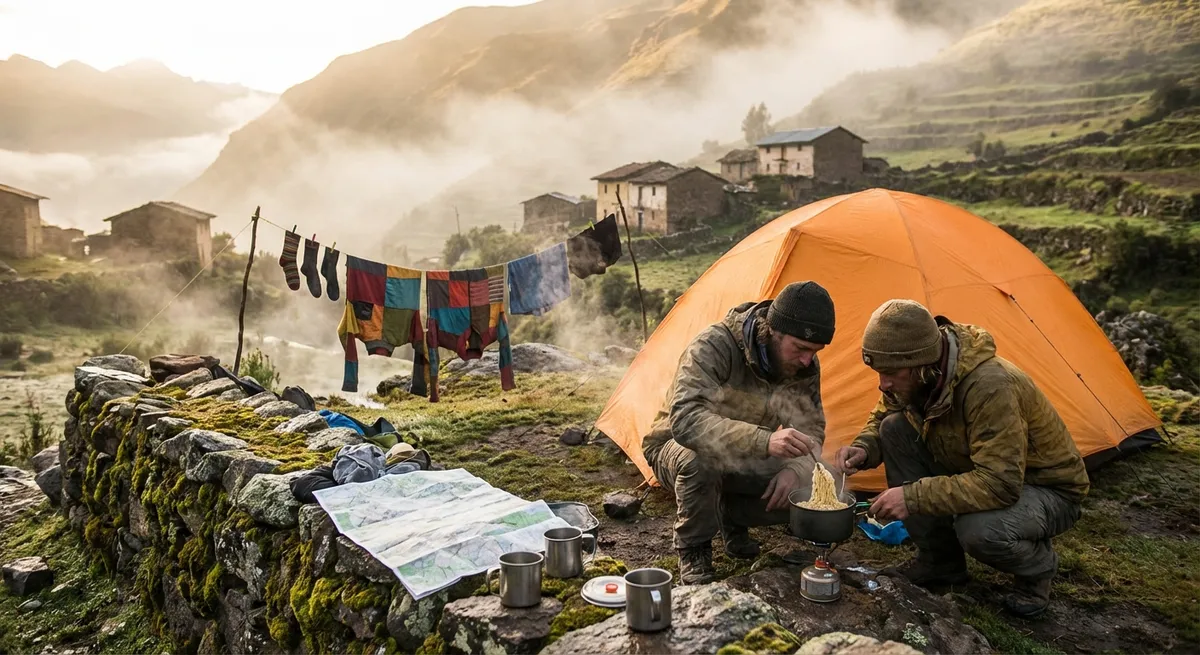
Below are five game-changing moves that turn “I can’t afford it” into “I can’t believe I did that.”
1. Follow the Flight, Not the Destination
If you always start with “Where do I want to go?” you’ll usually overpay. Budget travelers flip it: they start with “Where is it cheapest to fly right now?”
Instead of locking in a single city and watching prices crush your dreams, open up your search. Use flexible-date tools to scan entire months and “everywhere” searches to see which destinations are calling you—price first, location second. That’s how $800 dreams become $250 tickets.
Let the flight deal decide the story. Maybe you land in a lesser-known city instead of the capital. That “compromise” often turns into your favorite memory: markets where no one speaks your language, side streets that never make the guidebooks, and sunsets shared with locals, not tour buses.
Practical tips:
- Fly midweek and at off-peak hours—sunrise flights often mean half-price.
- Consider nearby airports and cheap ground transport instead of paying for the “perfect” arrival.
- Travel light so you’re never ambushed by baggage fees that quietly destroy your budget.
2. Trade Hotels for Local Keys and Unusual Beds
The most forgettable part of travel is usually the generic hotel room. Budget travel is your excuse to skip that—and you’ll often find richer experiences for less cash.
Think beyond the standard stay:
- Family-run guesthouses where the owner remembers your name and your coffee order.
- Hostels with private rooms that cost less than chain hotels and come with built-in friendships.
- Farm stays and homestays where your “breakfast included” means eggs still warm from the henhouse and stories around the kitchen table.
- Overnight trains, ferries, or buses that double as transport and accommodation, freeing up extra money and time.
You’re not just saving on a bed; you’re stepping into local life. The person handing you your room key might point you to the cheap, legendary street stand, the quiet sunset lookout, or the local festival no algorithm ever suggested.
Practical tips:
- Filter for “kitchen access” to cook a few meals and cut costs dramatically.
- Read recent reviews—cleanliness and safety matter more than décor when you’re on a budget.
- Book cancellable options, then watch for price drops and rebook if rates fall.
3. Eat Like You Live There, Not Like You’re Visiting
Restaurant-heavy travel is a quick way to burn cash and blur experiences. Budget travelers know the real flavor of a place isn’t usually found behind laminated English menus.
Shift your mindset from “dining out” to “eating in the world”:
- Hunt for busy street food stalls where locals line up—that’s your best sign of quality and price.
- Hit markets in the morning for fresh fruit, bread, cheese, or snacks that can power a whole day of exploring.
- Visit supermarkets once in each new country—they’re culture lessons disguised as budget savers.
- Pack a simple picnic and eat with a view instead of paying for the view in a restaurant.
When you do splurge on a sit-down meal, make it count: a famous local dish at a beloved spot, a menu of the day at lunch, or a neighborhood restaurant far from museum districts. You’ll spend less and remember more.
Practical tips:
- Carry a reusable water bottle where tap water is safe to drink—small purchases add up fast.
- Try eating your “big meal” at lunch when daily specials are cheaper.
- Learn a few food phrases (“local special,” “recommended,” “spicy?”) to avoid tourist traps and connect with your server.
4. Turn Transit Into Exploration, Not Just a Transfer
Fast travel is expensive travel. Budget travelers slow down—and win twice: they pay less and see more.
Instead of stringing together short flights, look at buses, trains, shared vans, and ferries. Overland journeys reveal the spaces between destinations: roadside villages, shifting landscapes, and tiny stations that never make itinerary lists. That “in-between” time can become the heart of your trip.
Stretch your budget by:
- Clustering countries or regions to avoid constant long-haul flights.
- Spending more days in fewer places, reducing transit costs and deepening your connection.
- Using overnight routes that combine transportation and accommodation.
Longer journeys also create space for serendipity: that stranger who shares snacks with you, the kid who teaches you card games, the fellow traveler who invites you to join their hike the next day.
Practical tips:
- Book intercity buses and trains early for the lowest fares, especially in Europe and parts of Asia.
- Use offline maps and download your route ahead of time to avoid getting lost (and overpaying) after dark.
- Consider transit passes or regional cards if you’ll be traveling heavily within one area.
5. Collect Experiences, Not Expenses
The most powerful budget trick is not a promo code—it’s your mindset. When you redefine “luxury,” your entire trip transforms.
You don’t need every paid attraction, tour, or activity. Instead, focus on experiences that cost little but feel immense:
- Sunrise hikes instead of rooftop bars.
- Free walking tours (tip what you can) that turn city streets into open-air classrooms.
- Local festivals, public concerts, and cultural events you stumble into by asking, “What’s happening this week?”
- Wandering through neighborhoods, waterfronts, or hills with nowhere urgent to be.
Decide in advance what you truly value: food, nature, art, nightlife, history, or connection. Spend boldly on a few unforgettable experiences in that lane, and let the rest be simple. When you align money with meaning, budget travel stops feeling like sacrifice and starts feeling like intention.
Practical tips:
- Track your daily spend roughly—awareness beats guilt.
- Keep a small “wildcard fund” for surprises: a last-minute boat trip, a concert, a class you discover on the road.
- Write down one standout moment each day; it’s a reminder that the best parts rarely have a price tag.
Conclusion
Budget travel isn’t about being cheap; it’s about being awake. When you chase value instead of vanity, you find yourself eating on doorsteps with strangers, sleeping under unfamiliar stars, and getting lost in streets that don’t care how much your ticket cost.
The world doesn’t only belong to people with unlimited funds. It belongs to people willing to trade comfort for curiosity, plans for possibilities, and expectations for whatever the road decides to offer.
Your next adventure doesn’t have to wait for a raise, a windfall, or a “someday.” It just has to start with a decision: to go anyway, to go differently, and to let a small budget build you a big, unforgettable life.
Sources
- U.S. Department of State – Travel Advisories - Up-to-date safety and security information for destinations worldwide
- U.S. Department of Transportation – Airline Passenger Rights - Official guidance on fees, delays, cancellations, and baggage rules
- European Union – Passenger Rights for Rail and Bus - Details on protections and compensation when traveling by train or bus in the EU
- Centers for Disease Control and Prevention – Travelers’ Health - Health, vaccine, and disease-prevention information by destination
- Hostelling International - Practical tips and insights on budget accommodations and responsible travel