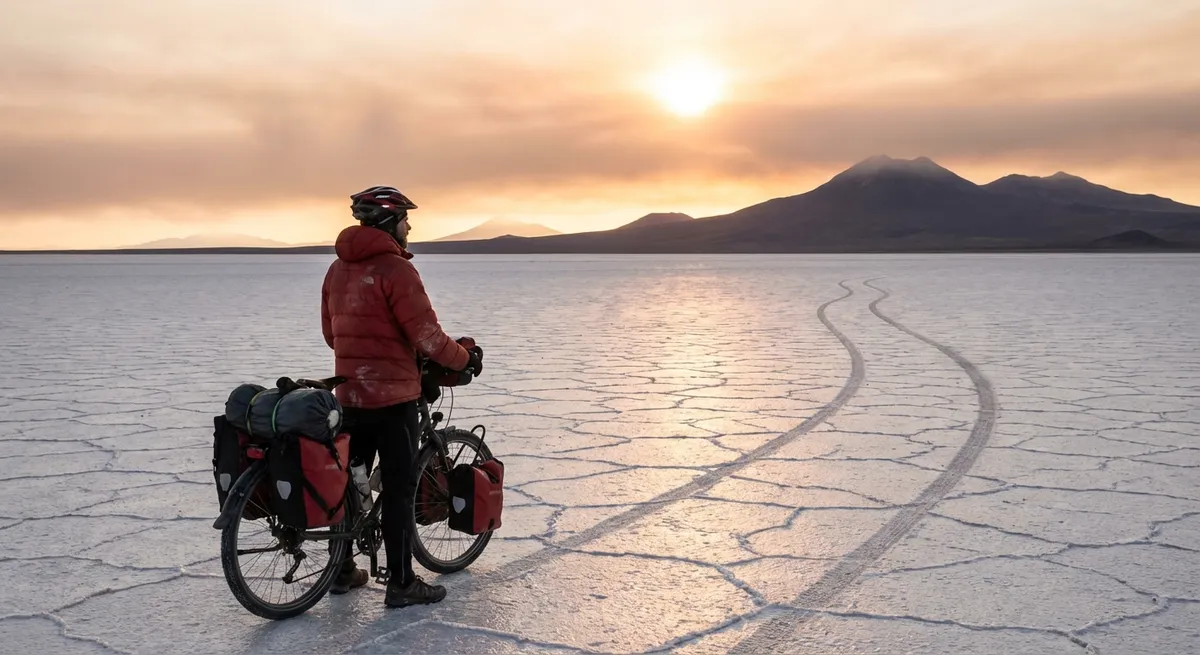
This isn’t about chasing the most extreme thrills or the most expensive destinations. It’s about choosing experiences that pull you into the heartbeat of a place—where your story and the world’s story collide in unexpected ways.
Below are five adventure ideas that do exactly that: vivid, attainable, and built to shake up how you travel next.
1. Chase First Light: Designing a Sunrise Mission
Sunrise is when a place hasn’t put its mask on yet. The streets are quieter, the air is cooler, and everything feels like it’s just been switched on for you. Making sunrise the main event of your day can turn an ordinary destination into something cinematic.
Pick a viewpoint that demands a little effort: a hill just outside town, a coastal cliff, a city rooftop café that opens early, or the deck of an overnight train nearing its final stop. Pack the night before: snacks, water, a light jacket, and a charged phone or camera (but don’t let the lens steal the whole moment).
Set your alarm uncomfortably early and build a tiny ritual around it—maybe journaling in the blue hour before the sky flips to gold, or sharing a thermos of coffee with a travel partner. Notice how differently you experience the city afterward: the bakery that’s just opening, locals on their morning commute, the streets you saw empty now filling with life.
Practical advice:
- Check sunrise time the day before and give yourself a buffer.
- Avoid isolated, truly remote viewpoints if you’re solo; go where you know others will pass by.
- Use offline maps so you’re not stuck without directions in the dark.
2. Trade Spectator Mode for Skill Mode
Instead of just observing a culture, step into it by learning something your destination is known for. Adventures feel deeper when your hands and body are part of the story.
In a coastal town, skip one boat tour and take a basic freediving or surf lesson. In a mountain region, try a beginner rock-climbing class with a local guide. In a city with a strong craft tradition, look for workshops: weaving, pottery, calligraphy, dance, traditional cooking, or even drumming.
You’re not trying to become an expert in two hours. You’re asking the place, “Teach me one thing you do well.” That question opens more doors than any guidebook. You’ll notice different details afterward—the way locals hold their tools, move their bodies, or season their food—because you’ve tried it yourself.
Practical advice:
- Look for classes run by local cooperatives, certified guides, or community centers to keep money in the community.
- Check reviews and certifications for any technical adventure (diving, climbing, trekking) and never skip safety briefings.
- Pack lightweight “skill gear”: a small notebook to capture tips, or a tote bag to carry anything you make.
3. Let One Train Line or Bus Route Write Your Day
Most travelers choose a destination, then figure out how to reach it. Flip the script: choose a train line, tram, or bus route—and let its stops design your day’s adventure.
Find a local transit line that crosses different neighborhoods: old districts, residential areas, maybe an industrial zone or a riverside. Instead of riding it end-to-end, hop off at stops that catch your eye: a crowded local market, a small park, a street mural, a bridge over water.
Give yourself loose rules:
- Spend at least 20–30 minutes exploring each stop.
- Talk to at least one person (ask for coffee recommendations or what people do for fun nearby).
- Eat somewhere with no English menu at least once, pointing and trusting the outcome.
By evening, you’ll have a mosaic of the city that few tourists see: a snack shared with someone’s grandmother, kids playing football under a flyover, a side street café where the barista remembers your face an hour later.
Practical advice:
- Buy a day transit pass if available; it gives you freedom to hop on and off without doing the math.
- Use maps to check which areas are safe and well-frequented, especially if solo or after dark.
- Carry a simple translator app for quick conversations—locals often appreciate even small efforts.
4. Build a “Micro-Expedition” Just Outside the City
You don’t have to cross continents to feel far from your old life. Some of the best adventures begin an hour outside the city you’re already in.
Treat one day like a micro-expedition:
Start with a satellite or terrain view of your destination. Look for rivers, ridgelines, coastal paths, forest patches, or small villages reachable by bus, bike, or rideshare. Then plan a simple but deliberate route: a loop hike, a bike trail connecting two towns, or a walk that follows a river from bridge to bridge.
The key is committing to it like it’s a big deal. Pack layers, real food (not just snacks), a small first-aid kit, and a printed or offline map. Decide on a turnaround time for safety. Know your bail-out options—train stations, bus stops, or villages with guesthouses.
By the time you return, dusty and wind-flushed, the city will feel different—not because it changed, but because you did.
Practical advice:
- Check weather and daylight hours; plan to be back before dark unless you’re experienced and properly equipped.
- Tell someone your route and expected return time, especially if going solo.
- Respect local rules: stay on marked paths, pack out trash, and avoid restricted or private land.
5. Create a Quest That Only Exists for This Trip
Adventure is often a matter of attention. Give your attention a mission, and suddenly every street becomes a story.
Before you arrive, invent a quest—simple, fun, and open-ended. For example:
- Find the best park bench view in the city.
- Collect one local word or phrase each day and learn its backstory.
- Track down three live music spots that aren’t advertised to tourists.
- Follow a river or canal through as many neighborhoods as you can reach on foot.
- Document doors, windows, or street art that tell the city’s personality.
Your quest turns wandering into a game. You’ll talk to more people (“Where’s your favorite hidden viewpoint?”), step into corners of the map you’d never notice, and come home with a personal “trophy”—photos, sketches, phrases, or memories that no tour group can replicate.
Practical advice:
- Keep the quest flexible; it should add to your trip, not dominate it.
- Share your progress in a simple photo series or daily recap—these make for highly shareable, authentic social posts.
- Involve locals whenever you can; crowdsourcing tips is half the fun.
Conclusion
Adventure isn’t waiting at the far edge of some remote continent. It’s hiding in earlier alarms, longer looks, new skills, missed stops, side routes, and the questions you’re brave enough to ask strangers.
You don’t need a bigger budget or a more dramatic destination—you need a different way of showing up. Treat each trip like a chance to experiment: watch the sunrise with intention, learn something your hands aren’t used to, ride a line to wherever it leads, step beyond the city’s border, and invent a quest only you could complete.
The map won’t remember which path you chose. But you will. And if you let it, your next adventure won’t just change your photos—it will quietly, persistently, change you.
Sources
- U.S. National Park Service – Hiking Safety Tips - Guidance on planning safe day hikes and micro-expeditions
- American Alpine Club – Travel and Climbing Safety - Articles on working with certified guides and managing risk in adventure activities
- PADI – Beginner’s Guide to Scuba & Freediving Courses - Overview of training standards and why certified instruction matters for water-based adventures
- Lonely Planet – Responsible Travel Advice - Practical ways to engage with local communities and support sustainable tourism
- World Health Organization – Travel Advice & Safety - Health-related guidance to consider when planning adventure-focused trips